
A arte cristalina de Denise Milan (The crystalline art of Denise Milan)
TEXTO Mario Helio
11 de Dezembro de 2025
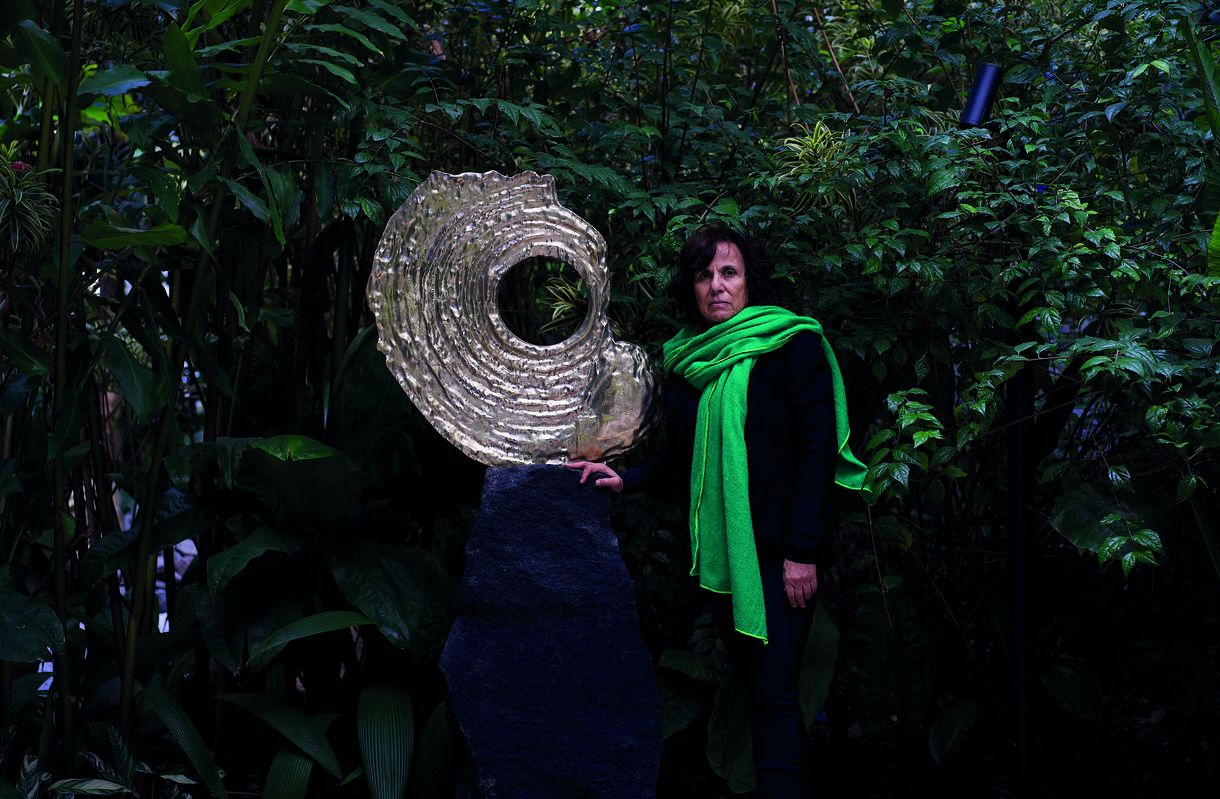
Foto Lucas Mandacaru/ Divulgação
Nos reinos e domínios da poesia e da técnica
Certa vez, ao dar aulas da disciplina de Poética, o compositor russo Igor Stravinski, fez questão de remeter-se às palavras usadas para poesia e arte, na Grécia antiga. Naquele tempo, a ideia sobre as artes e a poesia era muito mais abrangente e objetiva. Basta sabermos que o termo para poesia derivava de um verbo cujo sentido exato é “fazer”.
“A poética dos filósofos da antiguidade não admitia lirismos sobre o talento natural, nem sobre a essência da beleza”, nos lembra o autor de A Sagração da Primavera. Quanto às artes, a situação é ainda mais prática. Para os gregos, arte é Techne. Não no sentido restrito de hoje em dia: de técnica, tecnologia. Para “arte” empregamos ars, que deriva do Latim. No entanto, como anota, corretamente, Stravinski, Techne “englobava para eles as belas artes e as artes úteis, e se aplicava à ciência e ao estudo das regras verdadeiras e precisas do ofício”.
A polissemia dos antigos foi, em mais de uma ocasião, simplificada, ou até amesquinhada, pelos modernos. No entanto, voltamos aos sentidos e à riqueza das origens, quando estamos diante da arte de Denise Milan. Virtuosa da beleza, a partir das rochas, das pedras e dos metais, sua arte é pura poesia, no sentido mais objetivo do termo. Por melhores que sejam as palavras, nunca alcançam a precisão, para designar certas coisas que se expressam ultrapassando fronteiras e limiares.
A arte de Denise Milan é assim, e mais: um convite ao conhecimento, empregando um processo de radical empatia com a Natureza. Há muitas lições de arte e humanismo nisso, e a primeira é esta: a beleza não é feita somente para se contemplar. A exuberância e elegância do seu trabalho artístico nos incita a ver e fruir as formas sem pressa. Não com o frenesi do consumo – de gourmet ou de gourmand – e, sim, numa atitude mais refinada de comunhão.
No longo artigo sobre alguns aspectos da sua estética, tentamos mostrar que ela materializa suas criações artísticas como um demiurgo (no sentido platônico). Sabemos que seus minerais, rochas, pedras e metais integram um reino, mas, como os entendemos como coisas vivas, com alguma licença poética, pensamos neles como parte de um domínio.
Nas suas exposições (inclusive a mais recente, em São Paulo, que se estende até fevereiro de 2026, no Hotel Rosewood), o leitor/espectador tem a prova. Prova no sentido científico, e no sentido de degustar, provar um alimento. Como em outra ocasião, esta edição de Continente é oferecida ao leitor com duas capas distintas. A da arte “extática” e individual de Milan, que se esmera em poesia e técnica, e a dinâmica coletiva do cinema, que é técnica (no sentido moderno), por excelência e, quando alcança a excelência, é também poíesis e techne.

Caminho do Ouroluz, 2025 bronze, basalto (The Path of the Golden Light, 2025 bronze, basalt) 160 x 180 x 80 cm - Foto: Lucas Mandacaru / Divulgação

A Escolha, 2011 - quartzo, bronze, amonita (The Choice, 2011 - quartz, bronze, amonite). Foto: Levi Mendes Jr / Divulgação
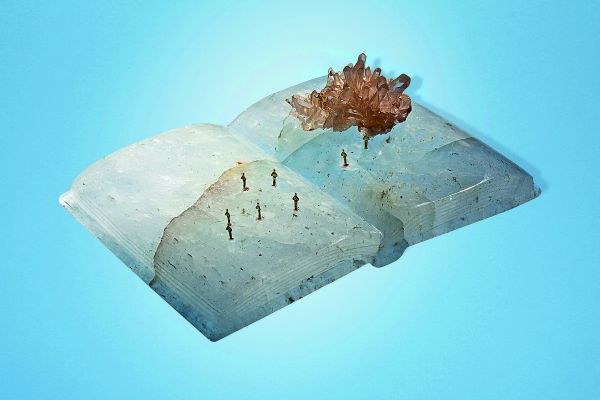
Destino I, 2011 - quartzo, bronze, drusa de quartzo (Destiny I, 2011 - quartz, bronze, quartz druse) - 8,5 x 25 x 18 cm - Foto: Levi Mendes Jr.

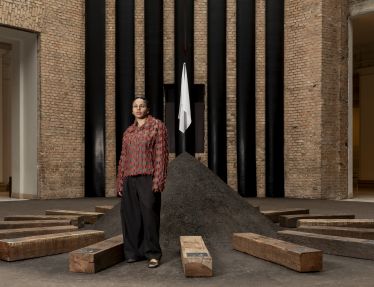
Sectiones Mundi, 1989 - concreto armado, alumínio (reinforced concrete, aluminum) 881 x 1556 x 1556 cm - Foto: Thomas Susemihl
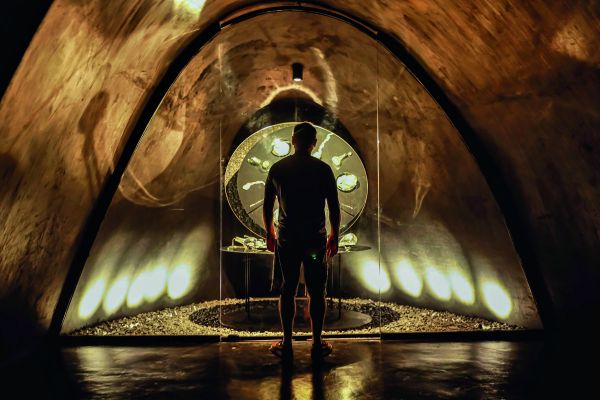
Reinauguração do Banquete da Terra em novo pavilhão (Reopening of the Earth Banquet in a new pavilion ) - Usina de Arte - Água Preta (PE), 2024 -Foto: Andréa Rego Barros/Divulgação
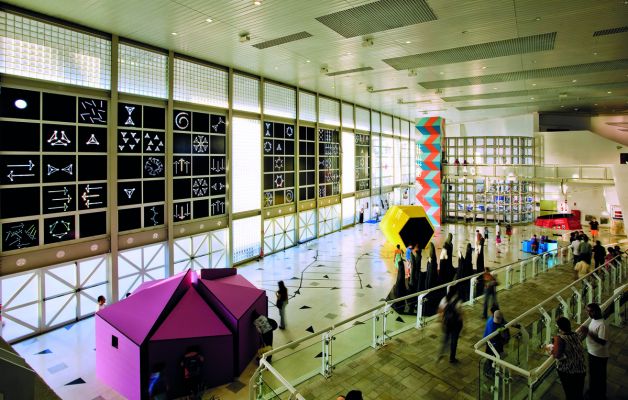
Ópera das Pedras (Opera of Stones), 2008 - Foto: Levi Mendes Jr.

Garden of Light, 1998 - Foto; Thomas Susemihl / Divulgação
Baixe PDF em edição bilíngue do ensaio crítico "O espetáculo da natureza na arte cristalina de Denise Milan"
In the realms and domains of poetry and technique
Once, while teaching a class on poetics, Russian composer Igor Stravinsky made a point of referring to the words used for poetry and art in ancient Greece. At that time, the idea of arts and poetry was much broader and more objective. Suffice it to say that the term for poetry derived from a verb whose exact meaning is “to make.” “The poetics of the philosophers of antiquity did not admit lyricism about natural talent or the essence of beauty,” reminds us the author of The Rite of Spring.
As for the arts, the situation is even more practical. For the Greeks, art is Techne. Not in the restricted sense of today: technique, technology. For ‘art’ we use ars, which derives from Latin. However, as Stravinsky correctly notes, Techne “encompassed for them the fine arts and the useful arts, and applied to science and the study of the true and precise rules of the craft.”
The polysemy of the ancients has, on more than one occasion, been simplified, or even belittled, by moderns. However, we return to the meanings and richness of the origins when we are faced with the art of Denise Milan. A virtuoso of beauty, using rocks, stones, and metals, her art is pure poetry, in the most objective sense of the term.
No matter how good the words are, they never achieve the precision to designate certain things that are expressed beyond borders and thresholds. Denise Milan's art is like this, and more: an invitation to knowledge, employing a process of radical empathy with Nature. There are many lessons of art and humanism in this, and the first is this: beauty is not only made to be contemplated.
The exuberance and elegance of her artistic work encourages us to see and enjoy forms without haste. Not with the frenzy of consumption—gourmet or gourmand—but with a more refined attitude of communion. In the long article on some aspects of his aesthetics, we try to show that he materializes his artistic creations as a demiurge (in the Platonic sense). We know that his minerals, rocks, stones, and metals are part of a kingdom, but, as we understand them as living things, with some poetic license, we think of them as part of a domain. In her exhibitions (including the most recent one in São Paulo, which runs until February 2026 at the Rosewood Hotel), the reader/viewer has the proof. Proof in the scientific sense, and in the sense of tasting, sampling food.
As on another occasion, this edition of Continente is offered to the reader with two different covers. One is Milan's “ecstatic” and individual art, which excels in poetry and technique, and the other is the collective dynamics of cinema, which is technical (in the modern sense) par excellence and, when it achieves excellence, is also poiesis and techne.
Leia a o texto do ensaio crítico sobre a obra de Denise Milan e a entrevista com o curador a exposição Respiração da Terra, de Denise Milan